High-power DC fast vs. Level 2: why we are not the typical apartment solution
If you manage a small complex and want overnight resident stalls, you need a different product than a travel-corridor DC fast hub.
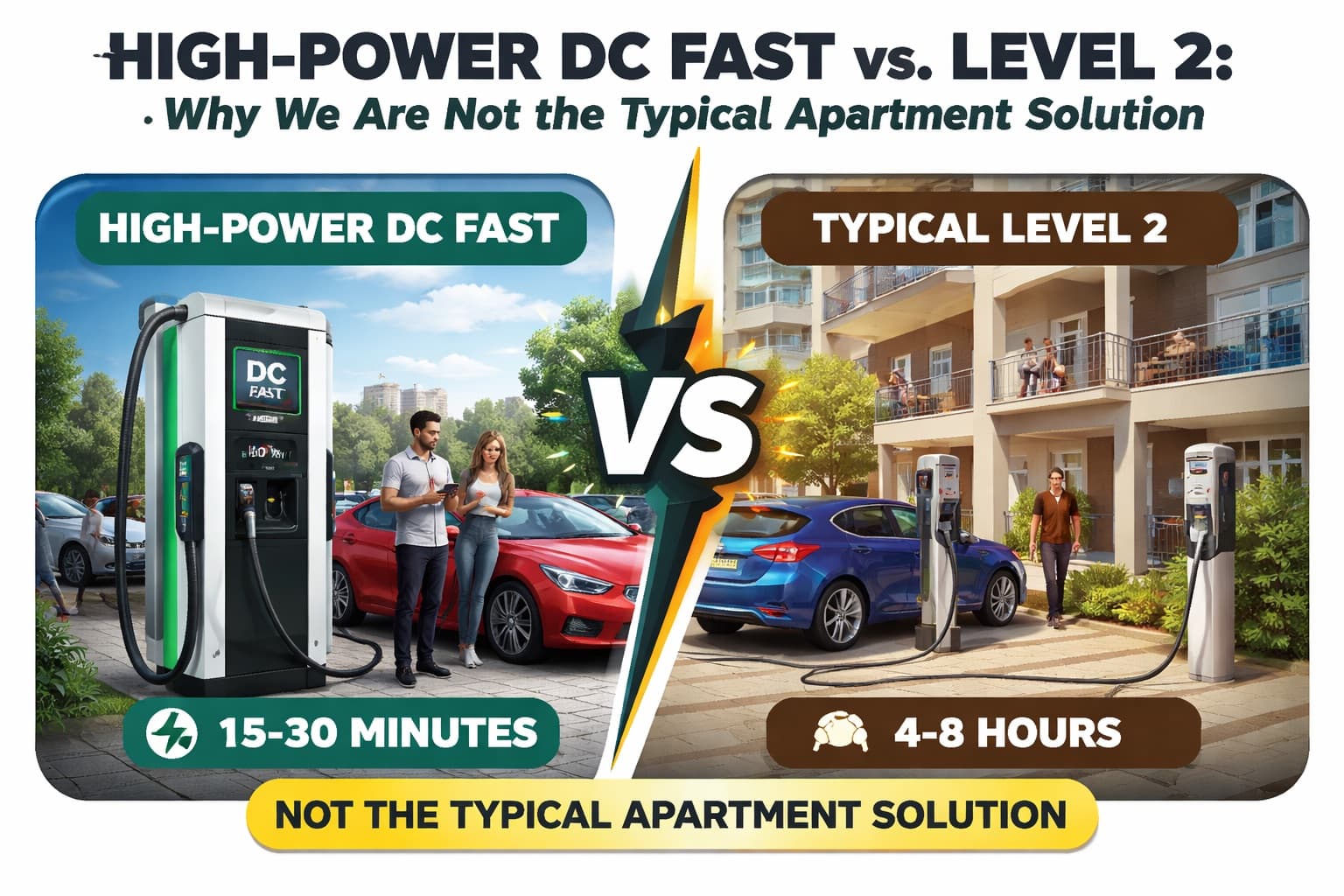
California needs both Level 2 "destination" charging and high-power DC fast charging. At EV Charge Partners we focus on the second category: commercial-scale sites where drivers need serious throughput and sites can support the electrical footprint—often on the order of a ~360 kW class deployment, not a handful of 6–19 kW Level 2 posts for resident garages.
What Level 2 is great for
Level 2 chargers are ideal when vehicles park for hours: workplaces, hotels, and many multifamily garages where residents sleep while cars charge. Load is spread over time, and projects can sometimes be phased with modest service upgrades.
What high-power DC fast is built for
DC fast charging is built for drivers who need to add range quickly and leave—think retail pads, restaurants along busy corridors, larger parking fields, and locations with strong visibility from highways. That use case pairs with heavier equipment, different utility expectations, and a different economic model than "one stall per tenant."
Why small apartment "Level 2 only" leads rarely convert for us
When a property wants slow charging exclusively for a limited number of residents, the engineering, permitting, and stakeholder set differs from a DC fast host site. Saying that up front saves everyone time—we just want to be transparent about the product we install under our land-lease program.
A better path for multifamily Level 2
For many buildings, the right next step is working with your utility's EV program, an electrical contractor familiar with CALGreen and Title 24, or a multifamily-focused charging operator. Those teams are set up for resident billing, load management, and phased panel upgrades—the core of most apartment projects.
Who should apply to us
- Commercial land owners (or their authorized leasing agents) who can sign a long-term land lease
- Sites where DC fast throughput and visibility matter
- Properties that can conceptually support high-power equipment and service—not a typical small garage retrofit